
When you’re trying to eat healthier, the front of a food package can be misleading. Words like “natural,” “low-fat,” or “made with whole grains” sound good, but they don’t tell the whole story. The real truth about what you’re eating is on the nutrition label — but only if you know how to read it.
Learning to read nutrition labels like a pro helps you make better choices, avoid hidden sugars and unhealthy fats, and find foods that truly nourish your body. Let’s break it down step-by-step.
1. Start with the Serving Size
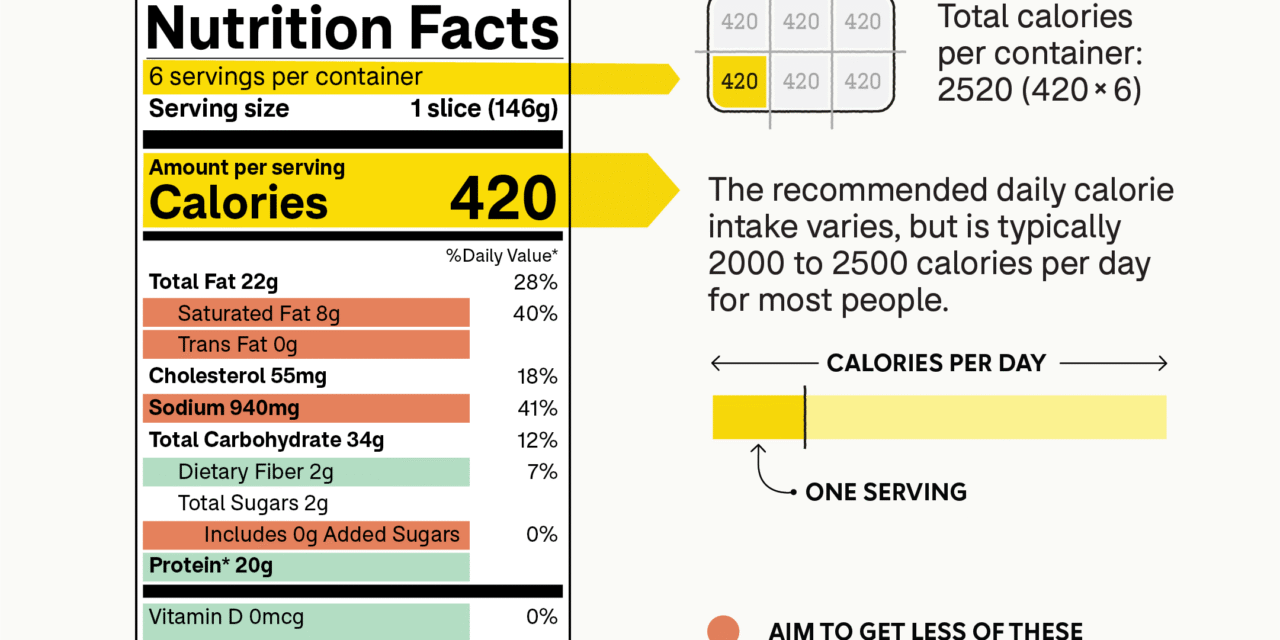
The first thing you should check is the serving size at the top of the label. All the numbers on the nutrition facts panel — calories, fat, protein, etc. — are based on this amount.
Here’s the catch: serving sizes are often much smaller than what people typically eat. For example, if a snack lists 150 calories per serving but the package contains three servings, eating the whole bag means you’re consuming 450 calories, not 150.
Pro Tip: Measure out a serving once in a while to get a realistic idea of how much you’re eating.
2. Check the Calories
Calories measure the energy you get from food. Knowing the calorie content can help you stay within your daily needs. While calories are important, they’re not the only factor — nutrient quality matters too.
If a food is high in calories but low in nutrients (like soda or candy), it’s not the best choice for everyday eating.
3. Look at the Nutrients to Limit
Some nutrients are better consumed in moderation:
-
Saturated Fat – Too much can raise cholesterol and increase heart disease risk.
-
Trans Fat – Avoid completely; even small amounts are harmful.
-
Sodium – High intake can contribute to high blood pressure.
-
Added Sugars – Limit to less than 10% of daily calories.
Pro Tip: If “partially hydrogenated oil” appears in the ingredients, the product contains trans fat, even if the label says “0g.”
4. Focus on the Nutrients You Need More Of
Look for foods high in:
-
Dietary Fiber – Supports digestion and helps control blood sugar.
-
Protein – Builds and repairs tissues and keeps you full.
-
Vitamins and Minerals – Such as Vitamin D, calcium, iron, and potassium, which support bone health, immunity, and overall wellness.
Pro Tip: Choose foods with at least 3 grams of fiber and 5 grams of protein per serving for a satisfying, nutrient-rich choice.
5. Understand % Daily Value (%DV)
The % Daily Value tells you how much a nutrient in one serving contributes to your daily needs, based on a 2,000-calorie diet.
-
5% DV or less = low
-
20% DV or more = high
For example, if a snack has 25% DV of sodium, it’s high in sodium and you may want to limit it if you’re watching your salt intake.
6. Read the Ingredients List
The ingredients are listed in order of weight, from most to least. If sugar, refined flour, or hydrogenated oils appear at the top, the food is likely less healthy.
Watch for hidden sugars under names like high fructose corn syrup, agave nectar, cane juice, or maltose — they all mean added sugar.
7. Compare Similar Products
If you’re deciding between two brands, compare their nutrition labels side-by-side. Sometimes a “healthier-looking” brand may actually have more sugar or sodium than its competitor.
Final Thoughts
Reading nutrition labels is like learning a new language — it takes practice, but once you get it, you’ll have the power to make truly informed food choices. By starting with the serving size, checking the nutrients you need to limit, focusing on those you need more of, and paying attention to %DV and ingredients, you can shop smarter and eat better.
The next time you’re at the grocery store, take a few extra seconds to read the label. Your body will thank you for it.