
In today’s fast-paced world, “healthy eating” often gets lost in a sea of fad diets, calorie counting apps, and food trends that promise fast results but rarely deliver long-term benefits. The truth? Healthy eating isn’t about perfection, restriction, or eliminating entire food groups. It’s about balance—creating sustainable habits that nourish your body and support your overall well-being.
So what does a balanced plate actually look like?
🥗 Build a Better Plate
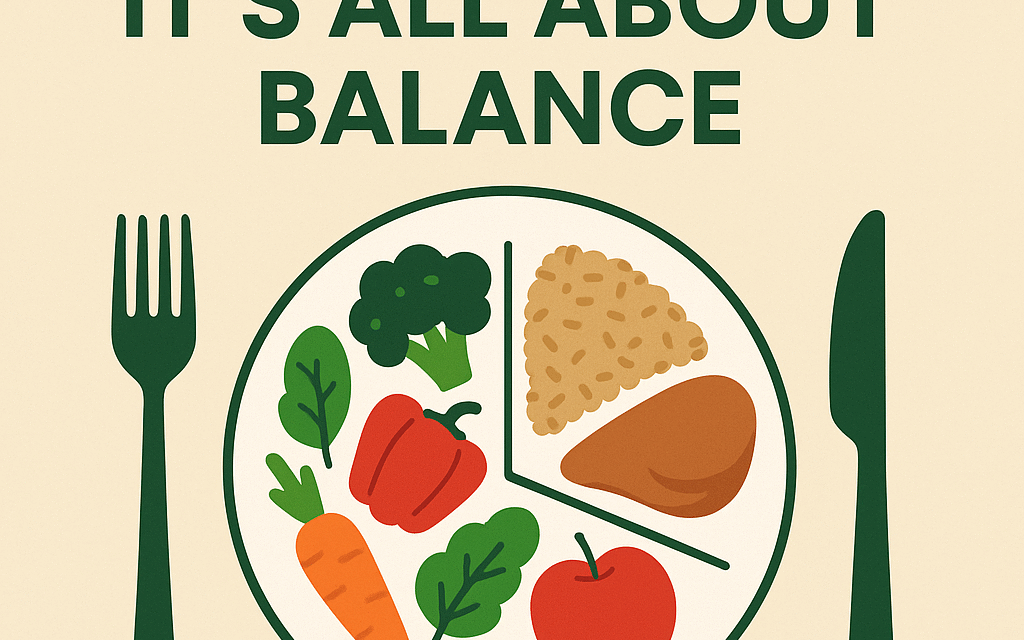
One of the simplest and most effective tools for balanced eating is the “plate method.” It helps you structure your meals in a way that gives your body everything it needs to thrive:
½ of your plate: Fill it with colorful vegetables and fruits. These are rich in fiber, vitamins, minerals, and antioxidants. Leafy greens, bell peppers, carrots, broccoli, berries, apples—the more variety and color, the better.
¼ of your plate: Add a source of lean protein. This could be chicken, turkey, eggs, fish, tofu, legumes, or low-fat dairy. Protein supports muscle repair, immunity, and satiety.
¼ of your plate: Include whole grains like brown rice, quinoa, oats, or whole wheat pasta. These complex carbohydrates provide lasting energy and help regulate blood sugar levels.
Finish the plate with a small serving of healthy fats—think avocado, olive oil, nuts, or seeds. Fats are essential for brain function, hormone balance, and absorbing fat-soluble vitamins like A, D, E, and K.
🍴 Portion and Variety Matter
Even the healthiest foods can lose their benefits when eaten in excess or without variety. Balance also means being mindful of portion sizes and ensuring you’re not eating the same things every day. Variety keeps your meals exciting and helps you get a broader spectrum of nutrients.
🧠 Mindful Eating for a Healthier Relationship with Food
Balanced eating isn’t just about what’s on your plate—it’s also about how you eat. Practicing mindful eating helps you tune in to your hunger cues and avoid overeating. Try these tips:
Eat without distractions like phones or TV
Chew slowly and savor your food
Stop when you’re comfortably full, not stuffed
When you slow down and enjoy your food, you naturally make better choices and feel more satisfied.
💡 Start Small, Stay Consistent
One of the biggest mistakes people make when trying to eat healthier is doing too much too fast. Instead, start small:
Add one extra veggie to your lunch or dinner
Swap white rice for brown rice a few times a week
Replace soda with water or herbal tea
Small, consistent changes add up over time and create habits that last.
In conclusion, healthy eating doesn’t have to be complicated. It starts with a balanced plate, mindful portions, and smart choices made consistently over time. Your body isn’t looking for perfection—it’s looking for nourishment. Feed it well, and it will reward you with more energy, better mood, and long-term health.
#EatWell #HealthyEatingBasics #BalancedNutrition #WellnessBlog #HealthyLiving