
Intermittent fasting (IF) has gained massive popularity for its potential benefits: fat loss, improved energy, mental clarity, and better blood sugar control. But what you eat during your eating window is just as important as when you eat.
To get the most from your intermittent fasting lifestyle, focus on nutrient-dense foods that nourish your body, support metabolism, and prevent blood sugar crashes. Let’s explore what to eat during your eating windows to fuel your day and maximize your fasting results.
🍳 1. Break Your Fast with Protein and Healthy Fats
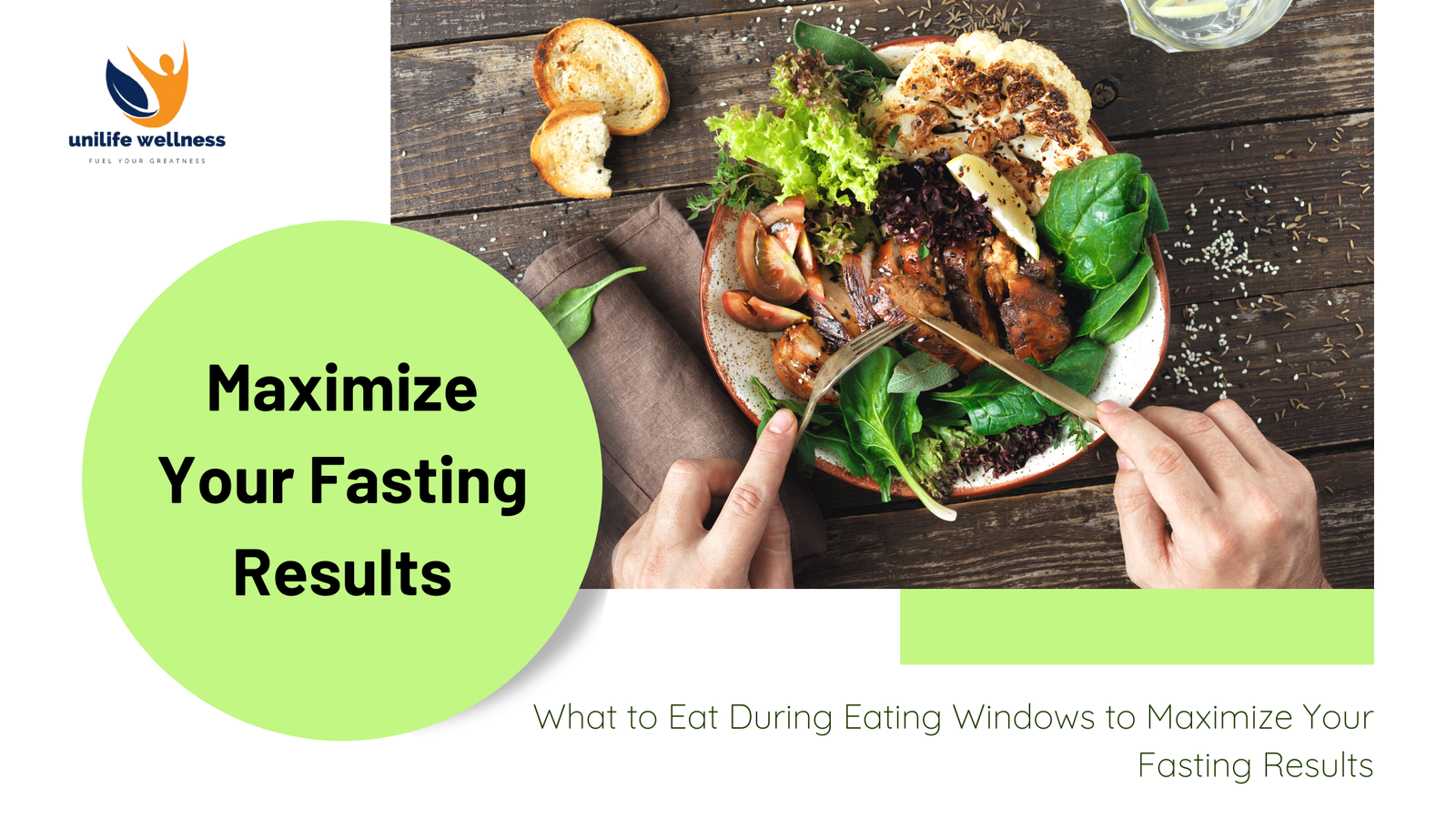
When your eating window begins, avoid breaking your fast with high-carb, sugary foods. These can spike blood sugar and leave you feeling hungry soon after. Instead, opt for a balanced meal rich in protein and healthy fats to promote satiety and stabilize blood sugar.
Great options include:
-
Eggs with avocado and leafy greens
-
Greek yogurt with chia seeds and nuts
-
A protein smoothie with almond milk, berries, and nut butter
These meals help sustain your energy and keep you fuller longer.
🥗 2. Prioritize Whole Foods and Avoid Processed Junk
Processed foods loaded with sugar and refined carbs can undo many of the benefits of intermittent fasting. Instead, fill your meals with whole, minimally processed foods.
Build your plate with:
-
Lean proteins (chicken, fish, tofu, eggs)
-
Complex carbs (sweet potatoes, quinoa, legumes)
-
Healthy fats (olive oil, nuts, seeds)
-
Non-starchy vegetables (broccoli, spinach, peppers)
Eating whole foods ensures you’re getting essential nutrients and fiber, which improves digestion and supports fat burning.
🧂 3. Don’t Forget Electrolytes and Hydration
During fasting, your body excretes more water and electrolytes. It’s important to stay hydrated and replenish sodium, magnesium, and potassium, especially if you feel tired or dizzy.
Try:
-
Water with a pinch of sea salt and lemon
-
Bone broth between meals
-
Mineral-rich foods like leafy greens, avocados, and nuts
🍚 4. Smart Carbs Can Work with Fasting – Not Against It
Low-carb diets often pair well with intermittent fasting, but you don’t have to go keto. Instead, choose smart carbs that provide energy without crashing your blood sugar.
Top picks:
-
Quinoa, oats, and lentils
-
Berries and apples
-
Sweet potatoes and butternut squash
Pair carbs with protein and fat to reduce blood sugar spikes.
🧁 5. Watch Out for Overeating or “Reward Meals”
It’s easy to justify unhealthy splurges during eating windows, especially after a long fast. But overeating or bingeing on unhealthy food can hinder your progress and cause digestive issues.
Keep your portions mindful, and eat slowly to recognize when you’re full.
Final Thoughts
Intermittent fasting is a powerful tool—but what you eat during your eating window determines whether it works for or against you. Focus on nutrient-dense, whole foods, and hydrate well to stay energized, burn fat, and support your long-term health goals.
By combining smart eating with the timing of fasting, you’ll unlock the true potential of intermittent fasting. ⏰🥑🥗